

Thanksgiving Turkey Safety: Simple Steps for a Healthy Holiday
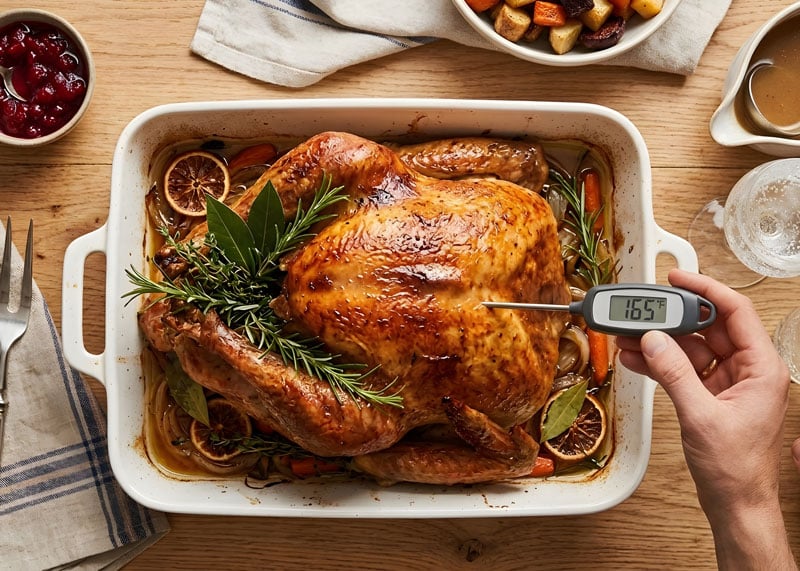
The MCHD suggests five steps to keep your Thanksgiving meal safe and enjoyable.
Thanksgiving is a wonderful time to gather with family and friends, share favorite dishes, and enjoy traditions. But preparing the holiday turkey also requires some important food safety precautions. Improper handling, thawing, or cooking can allow harmful bacteria to develop. If consumed, these bacteria can cause food poisoning.
The Moultrie County Health Department (MCHD) encourages families to follow these simple steps to keep their Thanksgiving meals delicious and safe.
#1. Thaw Your Turkey Safely
A frozen turkey needs time to thaw properly. According to the Centers for Disease Control and Prevention (CDC), there are three safe ways to thaw your turkey:
- In the refrigerator: Allow approximately 24 hours for every 4–5 pounds of turkey. A 20-pound turkey may need five days to thaw completely.
- In cold water: Keep the turkey in a leakproof bag, completely submerged in cold tap water. Change the water every 30 minutes, allowing approximately 30 minutes per pound.
- In the microwave: Follow the microwave manufacturer's instructions.
If you thaw your turkey in cold water or a microwave, cook it immediately.
Never thaw a turkey on the kitchen counter, in the garage, or outdoors. Bacteria can multiply rapidly when poultry reaches unsafe temperatures.
#2. Keep Your Kitchen Clean
Raw turkey and its juices can contain harmful bacteria, including Salmonella and Campylobacter.
To prevent contamination:
- Wash your hands with soap and water for at least 20 seconds before and after handling raw turkey.
- Use separate cutting boards for raw poultry and ready-to-eat foods.
- Wash utensils, countertops, and other surfaces with hot, soapy water after contact with raw turkey.
- Never rinse or wash raw turkey. Splashing water can spread bacteria around your kitchen.
# 3. Cook Your Turkey to the Right Temperature
A golden-brown turkey isn't necessarily safe to eat. The only reliable way to know whether your turkey is fully cooked is to check its internal temperature. The United States Department of Agriculture (USDA) recommends cooking turkey to a minimum internal temperature of 165°F.
Set your oven to at least 325°F. Use a food thermometer to check the thickest part of the breast and the innermost parts of the thigh and wing, avoiding bones. For additional guidance, read MCHD's article, The Food Thermometer: An Essential Tool for Every Home Kitchen.
# 4. Prepare Stuffing Carefully
Cooking stuffing separately in a casserole dish is the safest choice.
If you prefer stuffing your turkey, add the stuffing immediately before cooking. Use a food thermometer to ensure its center reaches 165°F. Allow the cooked turkey to rest for 20 minutes before removing the stuffing and carving.
# 5. Refrigerate Leftovers Promptly
Thanksgiving leftovers are delicious, but you must store them properly.
- Refrigerate leftovers within two hours.
- Cut turkey into smaller pieces and store in shallow containers.
- Eat refrigerated leftovers within three to four days. You can also freeze them for extended storage.
- Reheat leftovers to 165°F before eating.
Make Food Safety Part of Your Thanksgiving Tradition
A little planning and careful food preparation can help protect everyone around your Thanksgiving table. For more information, visit the CDC's Holiday Turkey Safety Guide.