

How to Help Prevent Head Lice in Children
Act now to help your child stay current on immunizations.
If you have a child in preschool through early elementary school, there’s a good chance you’ll deal with head lice at some point. It’s common, frustrating—and often misunderstood.
Recent local observations have highlighted this concern. Unfortunately, many families are unaware of the prevalence of head lice and how to prevent or eliminate them.
Let’s break down this issue and what you can do to reduce your risk of exposure.
What To Know About Head Lice and “Super Lice”
According to the Centers for Disease Control and Prevention (CDC), more than 6 million children ages 3-11 years living in the United States get a head lice infestation each year.
Head lice are tiny insects that live on the scalp and feed on human blood. They are typically spread through direct contact with a person or item contaminated with lice or eggs (nits).
“Super lice” is a term used to describe common head lice that have developed resistance to some over-the-counter treatments, making them harder to get rid of.
Many believe head lice are linked to poor hygiene or low income. The truth is that head lice infestations can occur in anyone, regardless of age, race, cleanliness, income level, or living conditions.
Eliminating this stigma is important for everyone’s well-being. When individuals feel ashamed or embarrassed, they may avoid seeking information or assistance, which can delay treatment and allow the lice to spread.
Why Young Children Are Most Affected
Children in Pre-K through 2nd grade are especially at risk of exposure to head lice, due to their naturally social behaviors, which include:
- Playing closely together
- Sharing personal items like hats, brushes, or headphones
- Sitting closely to each other during class and other activities
Even with good intentions, young children often forget not to share personal items. As one local observer noted, simply teaching a child not to share brushes or hats is merely “a start.”
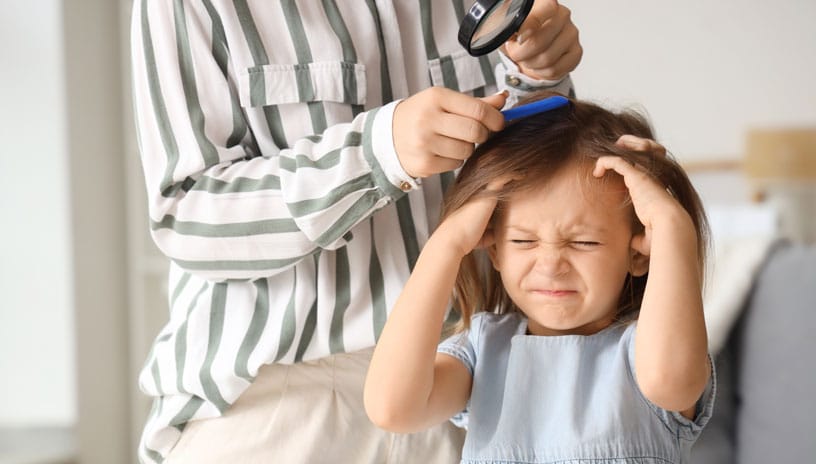
Hence, many experts advise checking your child’s head weekly as a preventive measure. During this time, remind your youngster how to safely and kindly reduce their own risk of exposure to head lice by avoiding the above activities.
Regardless of effort, parents and caregivers need to understand that a head lice infestation may come home with their child. This increases the likelihood of spread to other household members.
What Are the Signs?
Head lice can be hard to spot, but common signs include:
- Frequent scratching of the scalp
- An itchy feeling in the hair
- Small white or yellow eggs (nits) attached to hair shafts
- Live lice moving near the scalp
What Parents Can Do
- Check your child’s scalp regularly. Pay special attention to hair behind the ears, at the crown, and along the lower hairline behind the head.
- Teach simple prevention. Remind children not to share:
- Brushes or combs
- Hats and scarves
- Hair accessories
- Treat promptly. If lice are found:
- Use an approved treatment product.
- Follow directions carefully.
- Check all household members.
- Remember to address your household environment.
- Don’t panic. While frustrating, head lice do not spread disease and are not a health hazard.
Awareness and Treatment Matter
While educating and checking your child are important to reduce the risk of head lice exposure, prompt recognition and treatment are pivotal in managing an infestation.
The CDC recommends using an FDA-approved product for head lice treatment and following the instructions. If over-the-counter products fail to effectively eliminate the infestation, the AAP recommends consulting a healthcare provider for additional guidance and intervention.
We’re Here to Help
The Moultrie County Health Department is here to support families with information and guidance on head lice and other common childhood health concerns. Please contact our office if you have questions or need further assistance. Early action can make all the difference for your child and for your family.